
Pineapple Glazed Salmon is a simple, bright salmon dinner with a sweet-tangy glaze. It uses common ingredients and easy steps for reliable results. This recipe cooks quickly and suits weeknight meals or small gatherings. Home cooks and beginners will find the method clear and forgiving. You can make parts ahead for easy weeknight cooking.
Why You’ll Love this Recipe
The finish is glossy and slightly sweet with a bright pineapple note. The salmon stays moist and flakes easily when cooked to the right temperature.
The glaze cooks down to a sticky coating that clings to the fish. Grilling or broiling concentrates the flavors and gives a light char that boosts texture and taste. Try it alongside simple rice or a crisp salad for a complete meal.
Ingredients You’ll Need
These ingredients create a balanced sweet and savory glaze plus seasoned salmon.
- Pineapple chunks: Fresh or canned pineapple gives bright sweetness and body to the glaze.
- Soy sauce: Adds salty, savory depth to balance the fruit.
- Honey: Brings natural sweetness and helps the glaze caramelize.
- Olive oil: Helps blend the glaze and prevents sticking while cooking.
- Ginger: Fresh grated ginger adds warm, spicy flavor.
- Garlic: Minced garlic gives savory aroma and depth.
- Rice vinegar: Adds acid to brighten the glaze.
- Black pepper: Freshly ground pepper adds mild heat and balance.
- Salmon fillets: Choose even-thickness fillets for uniform cooking.
- Sesame seeds (optional): For a light garnish and texture contrast.
Measurements are in the recipe card below.
How to Make This Pineapple Glazed Salmon
This method stays simple and reliable. Follow each step for even cooking and glossy glaze.
Step 1. Make the glaze.
Blend the pineapple, soy sauce, honey, oil, ginger, garlic, vinegar, and pepper until smooth. Set the glaze aside and reserve half for basting.
Step 2. Preheat the grill or pan.
Heat the grill or a grill pan to medium-high and oil the grates lightly. This prevents sticking and helps create a sear.
Step 3. Marinate the salmon.
Place fillets in a shallow dish and pour half the glaze over them. Let them sit 15–20 minutes so the flavors penetrate.
Step 4. Grill skin-side down.
Place salmon skin-side down and cook 4–5 minutes before flipping carefully with a spatula. Watch for even browning.
Step 5. Baste and finish.
Brush the top with reserved glaze and grill 4–5 more minutes, or until the fish flakes easily with a fork. Avoid overcooking.
Step 6. Rest and garnish.
Transfer to a platter, drizzle any remaining glaze, and sprinkle sesame seeds and chopped green onion if desired.
Tips for Success
Follow a few simple tips to get consistent results.
- Pat dry: Dry the fillets before marinating so the glaze sticks.
- Room temperature: Bring salmon to room temperature for even cooking.
- Watch time: Cook until the fish flakes easily to avoid drying it out.
- Use a thermometer: Aim for 125–130°F for medium doneness.
- Reserve glaze: Keep some glaze back for basting and finishing.
Let the salmon rest a few minutes before serving to set the glaze.
Equipment Needed
- Grill or grill pan
- Blender or food processor
- Shallow dish
- Spatula
- Tongs
Variations
- Honey-Lime Glaze: Add lime juice for a tangy finish.
- Spicy Glaze: Stir in sriracha or chili flakes for heat.
- Coconut Pineapple: Use coconut aminos and toasted coconut for a tropical twist.
Serving Suggestions
- Steamed rice: Simple and absorbs the glaze.
- Mixed green salad: Adds freshness and crunch.
- Grilled vegetables: Match the smoky notes of the salmon.
FAQs About This Recipe
Can I make the glaze ahead of time?
Yes. Refrigerate the glaze in an airtight container for up to 3 days. Rewarm gently before using and reserve some for finishing.
Can I bake the salmon instead of grilling?
Yes. Bake at 425°F for 10–12 minutes, then broil 1–2 minutes to caramelize the glaze. Watch closely to avoid burning.
How do I store leftovers?
Cool the salmon, then store in a sealed container in the fridge for up to 2 days. Reheat gently to preserve texture.
What can I use instead of soy sauce?
Use tamari or coconut aminos for a gluten-free option. Adjust salt to taste if needed.
Conclusion
For an alternate reference and serving ideas, see the Well Plated recipe page.
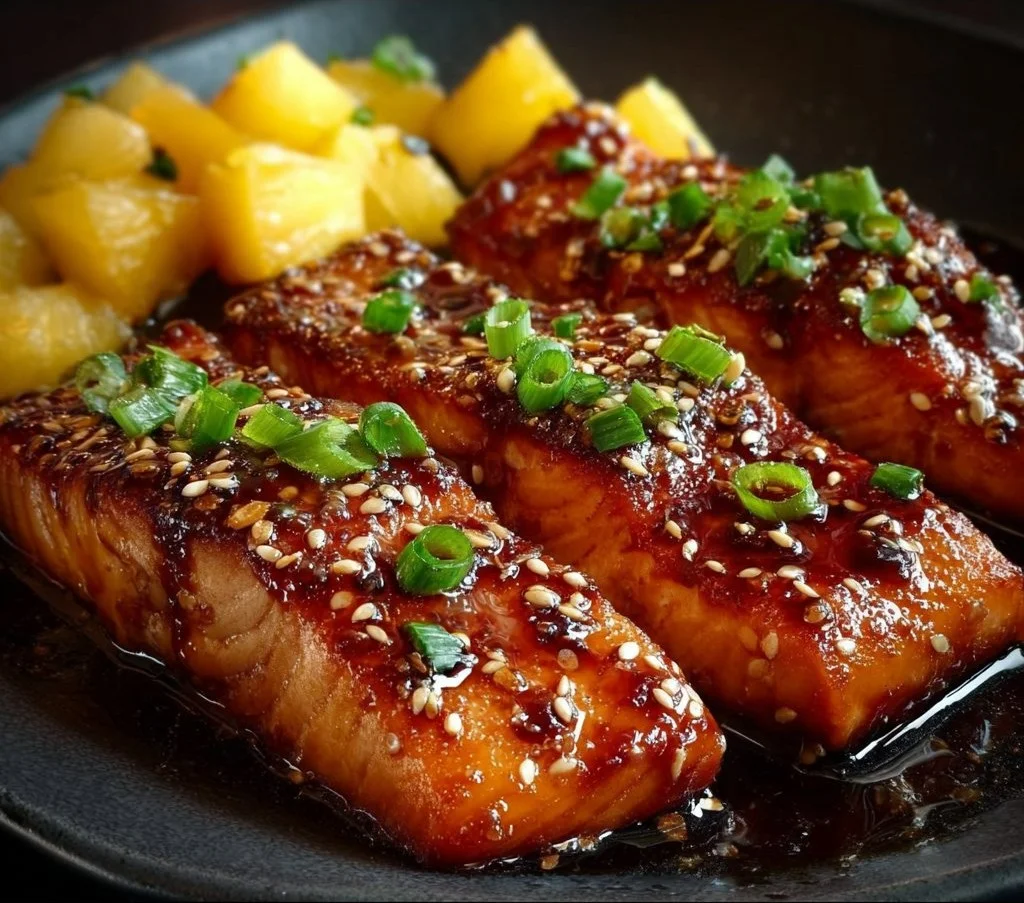
Pineapple Glazed Salmon
Ingredients
Method
- Blend the pineapple, soy sauce, honey, oil, ginger, garlic, vinegar, and pepper until smooth. Set aside half of the glaze for basting.
- Preheat the grill or grill pan to medium-high and oil the grates lightly.
- Place salmon fillets in a shallow dish and pour the other half of the glaze over them. Let sit for 15–20 minutes.
- Place salmon skin-side down on the grill and cook for 4–5 minutes before flipping carefully.
- Brush the top of the salmon with reserved glaze and grill for another 4–5 minutes or until it flakes easily with a fork.
- Transfer to a platter, drizzle with remaining glaze, and sprinkle with sesame seeds and chopped green onion if desired.